Does your toddler recognise a red apple but struggle to name its colour? Or do they confuse blue, green and yellow while playing? These are common experiences for parents introducing colours to young children. Learning colour names takes time, repetition and opportunities to explore.
Fortunately, teaching colours does not require expensive toys, complicated worksheets or lengthy lessons. Simple activities using colourful blocks, household objects, picture cards and interactive games can make learning enjoyable.
The best colour recognition games for toddlers help children identify, match and name colours while developing observation, vocabulary, memory and early thinking skills. Parents can introduce these activities into everyday routines, making colour learning a natural part of playtime.
This guide explores practical colour matching games, age-wise activities and simple daily routines for children aged 2–5.
Why Are Colour Recognition Games Important?
Colour recognition helps toddlers understand their surroundings and identify differences between everyday objects.
Regular colour learning activities can support:
- Visual observation and recognition skills.
- Vocabulary and early communication development.
- Memory, attention and concentration.
- Sorting, matching and classification abilities.
- Confidence during everyday learning experiences.
Children develop these abilities at different speeds. Parents should encourage playful exploration rather than expecting immediate results.
Best Colour Recognition Games for Toddlers
Colour matching is one of the easiest preschool learning activities.
Collect colourful blocks, balls or toy cars. Show your child a red object and encourage them to find another object of the same colour.
Begin with two familiar colours before gradually introducing additional shades.
This activity encourages visual recognition, concentration and early matching skills.
Colour sorting activities help toddlers understand similarities and differences.
Place coloured baskets or containers on the floor. Provide matching toys and encourage children to sort them into the correct containers.
Demonstrate the activity first, then allow children to explore independently.
Sorting games also support coordination, attention and early problem-solving abilities.
Everyday surroundings offer excellent opportunities for colour recognition.
Ask your toddler to find something yellow, green or blue inside the house.
Children can identify colours in clothing, cushions, books, fruits and toys.
This simple activity connects colour vocabulary with familiar objects and encourages observation.
4. Interactive Colour Learning Games
Digital educational activities can complement traditional colour learning experiences.
Interactive games featuring colourful pictures, matching challenges and simple visual exercises provide opportunities for repeated practice.
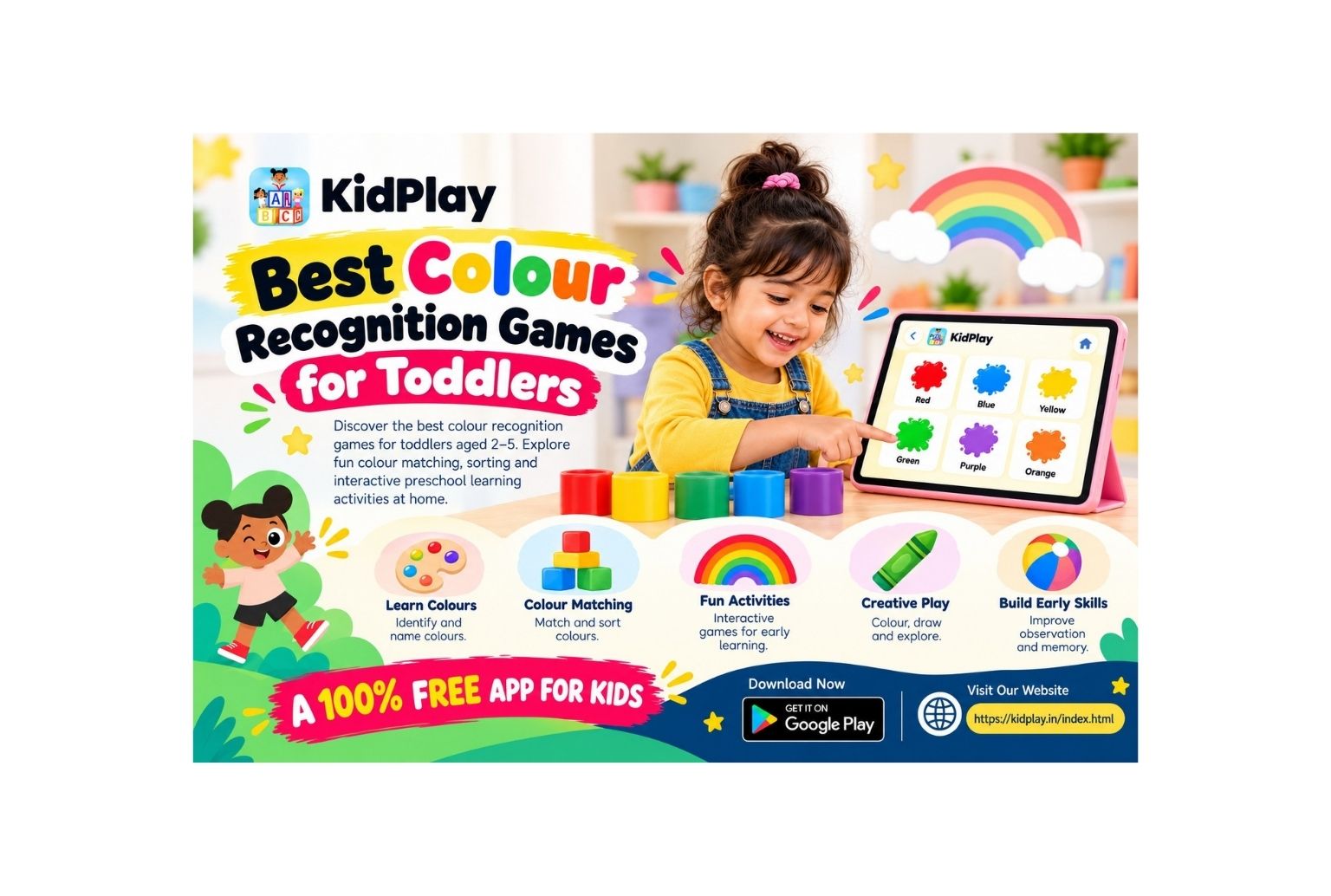
Parents exploring a 100 percent free app for kids can discover KidPlay, which offers preschool learning activities involving colours, shapes, alphabets and numbers.
Download KidPlay Now: Visit the official KidPlay website or download KidPlay from Google Play Store to explore interactive educational activities.
5. Colour Recognition With Picture Cards
Picture cards help toddlers connect colours with familiar objects.
Show pictures of bananas, apples, leaves and flowers. Encourage children to identify the colours they recognise.
Introduce simple phrases such as "yellow banana" or "green leaf."
This activity supports vocabulary development, observation and communication.
Frequently Asked Questions
1. What are the best colour recognition games for toddlers?
Colour matching, sorting, picture cards, colour hunts and interactive educational games are useful activities for introducing basic colours.
2. When should toddlers start learning colours?
Many toddlers begin noticing colour differences during early childhood. Naming colours develops gradually through everyday experiences and repetition.
3. How can parents teach colours at home?
Use colourful toys, household objects, picture books and simple matching games. Encourage children to identify colours naturally during playtime.
4. Are colour learning apps useful for preschoolers?
Age-appropriate educational apps can support colour recognition when combined with supervised screen time and hands-on activities.
Conclusion
Colour recognition games make early learning enjoyable while supporting observation, vocabulary and matching skills. Parents can combine simple household activities, picture cards and interactive games to create engaging learning experiences.
Consistent practice, encouragement and playful exploration help children build confidence without unnecessary pressure.
Download KidPlay Now from Google Play Store or visit the official KidPlay website to explore preschool educational games and activities.