A simple daily learning routine helps preschool children learn through play, repetition, movement and exploration. At this age, children do not need long study sessions. They learn best when activities are short, enjoyable and connected to everyday experiences. A balanced routine can support early literacy, number skills, communication, creativity, memory and coordination without making learning feel like homework.
Morning: Alphabet and Language Learning
Start the morning with conversation. Ask your child about breakfast, the weather, clothes or plans for the day. Simple questions encourage children to speak, listen and learn new words. Spend 10 to 15 minutes practising letters and sounds. Introduce two or three letters using pictures, toys or household objects. Ask the child to identify a letter, say its sound and find something beginning with it.
Mid-morning is also a good time for a short picture book. Point to pictures, name objects and ask simple questions about the story. This develops vocabulary, listening and early comprehension skills.
Mid-Morning: Numbers, Shapes and Colors
After a short break, introduce basic number activities. Count toys, fruits, blocks or steps together. Ask questions such as, “How many are there?” or “Which group has more?” Everyday counting helps children understand numbers naturally.
Next, practice colours and shapes. Ask children to identify circles, squares, triangles and rectangles around the home. Sorting objects by color, size or shape turns ordinary play into an engaging preschool learning activity. Keep each activity brief and celebrate effort rather than demanding perfect answers.
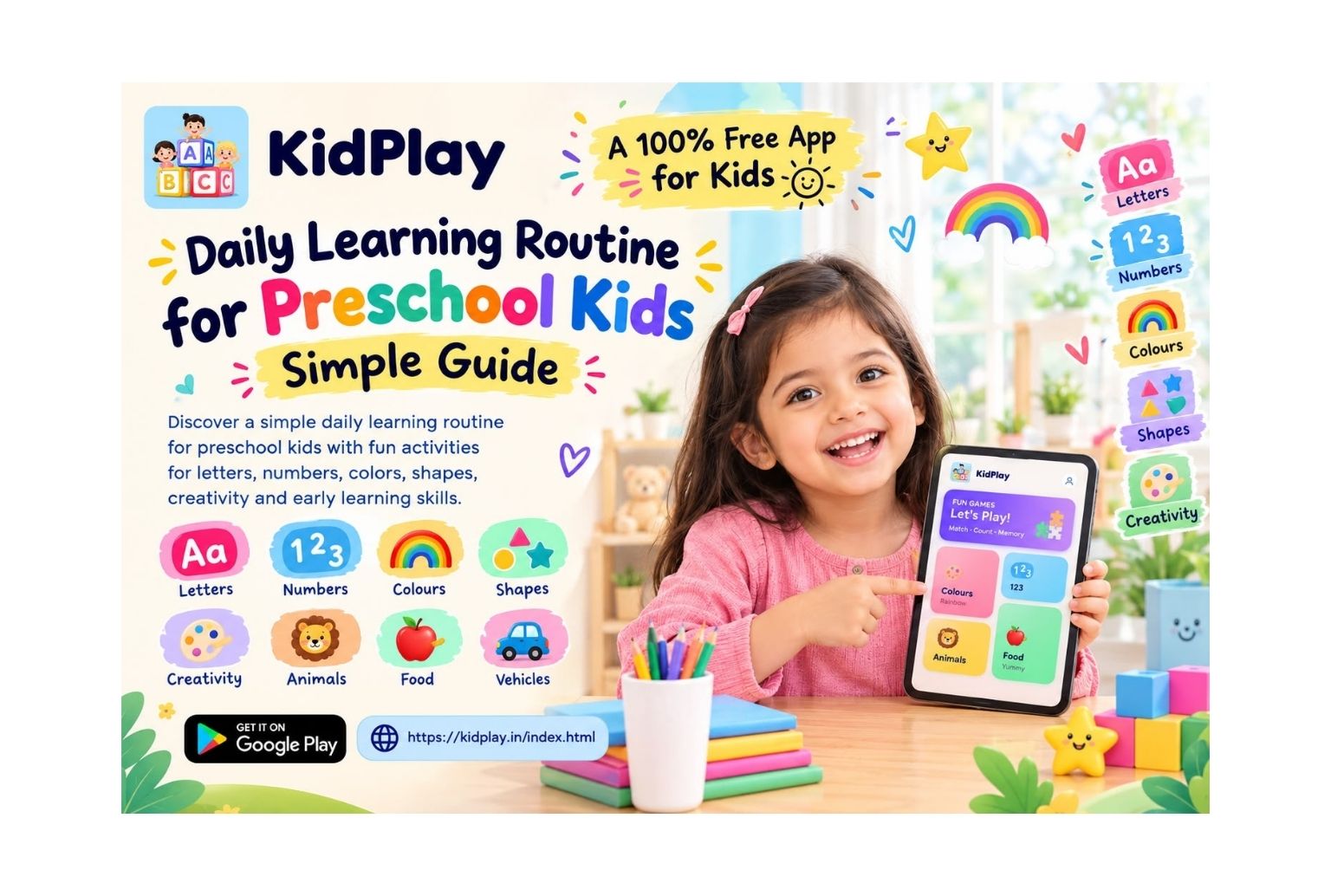
A digital activity can also provide variety during learning time. A 100 percent free app for kids can complement hands-on practice by giving children another way to explore early concepts.
Make learning part of everyday play with KidPlay, a 100 percent free app for kids. Download the KidPlay now and add interactive early-learning practice to your child's routine.
Afternoon: Creativity and Active Play
Afternoons are ideal for creative learning. Give children crayons, paper, blocks or safe craft materials and let them draw, color, build and experiment. Drawing and craft activities encourage imagination while helping develop fine motor skills.
Storytelling can be included after active play. Read a short story and ask what happened first, what happened next and which character they liked. These questions encourage memory, sequencing and communication.
Evening: Revision Through Games
Keep evening revision relaxed. Spend around 10 minutes reviewing letters, numbers, colors or shapes learned earlier. Instead of repeating worksheets, use games. Ask the child to find five objects, name three colors or identify letters on signs and books.
Educational games can make revision enjoyable. Parents can also use age-appropriate digital learning activities as a supplement to real-world play, reading and conversation. The goal is to maintain interest rather than extend screen time unnecessarily.
Simple Tips for Parents
Keep the routine flexible. Some days children may be energetic and ready to learn, while on other days they may need more rest or free play. Avoid comparing your child with others. Praise effort, curiosity and progress.
A healthy preschool routine should balance learning with meals, sleep, physical activity, family time and relaxation. Technology can support early learning, but it should not replace conversations, books, creative play or hands-on experiences.
A predictable routine can also help children understand what comes next. Use simple cues such as “learning time,” “play time,” and “story time.” This creates familiarity without making the day rigid. Over time, children can begin participating in small parts of the routine independently each day.
Frequently Asked Questions
What should a preschool child learn every day?
Children can practise letters, sounds, numbers, colors, shapes, vocabulary, storytelling, creativity and physical skills through short playful activities.
How long should preschool learning sessions be?
Sessions of about 10 to 15 minutes are often suitable for young children, followed by breaks or a change of activity.
Can educational apps be part of a preschool routine?
Yes. A suitable educational app can supplement hands-on activities, reading, conversation and physical play.
How can parents make learning more enjoyable?
Use games, stories, songs, household objects, drawing and movement. Follow the child's interests and keep activities short.
Conclusion
A simple daily learning routine can help preschool children develop important early skills while enjoying the process. Combine alphabet and number practice with stories, creativity, movement and free play. Keep sessions short, flexible and positive, and allow children to explore at their own pace.
For parents looking for an additional digital learning activity, KidPlay offers a simple option for early learning practice. Download the KidPlay now and make learning a fun part of your child's day.