Digital Learning Activities for Preschool and Kindergarten
Looking for fun and educational activities for preschool and kindergarten children at home? Parents can introduce early learning through simple digital activities that help children explore ABCs, numbers, phonics, shapes, colours, stories, and worksheets in an engaging way.
At this age, children learn best when activities are varied, easy to follow, and connected to everyday experiences. Digital learning can provide one convenient part of a broader routine that also includes reading, drawing, physical play, conversations, and hands-on exploration.
The goal is not simply to keep children occupied. It is to create meaningful opportunities to practise early literacy, numeracy, language, observation, and creative thinking while keeping learning enjoyable.
1. ABC and Alphabet Learning Activities
Alphabet activities help children recognise letters and connect them with familiar words and objects. For example, children can learn the letter A with Apple or B with Ball.
Parents can extend the activity by asking children to find something at home that begins with the same letter. This simple follow-up connects digital learning with everyday experiences and vocabulary building.
2. Numbers and Counting Activities
Early number activities introduce numerals, counting, sequencing, and basic quantity concepts. Children can practise recognising numbers and then apply the idea by counting toys, books, fruits, or other household objects.
This makes numbers easier to understand as quantities rather than symbols that children simply memorise.
3. Shapes and Colours Activities
Shapes and colours are important concepts for preschool and kindergarten learners. Children can explore common shapes such as circles, squares, triangles, and rectangles while identifying familiar colours.
Parents can turn this into a quick observation game by asking children to find objects with particular shapes or colours around the house.
4. Phonics and Language Activities
Phonics activities introduce children to the sounds associated with letters. Listening to beginning sounds and repeating simple words can support vocabulary development and early reading readiness.
Parents can continue the activity offline by asking questions such as, “Can you find something that starts with B?” This encourages children to listen carefully and connect sounds with familiar objects.
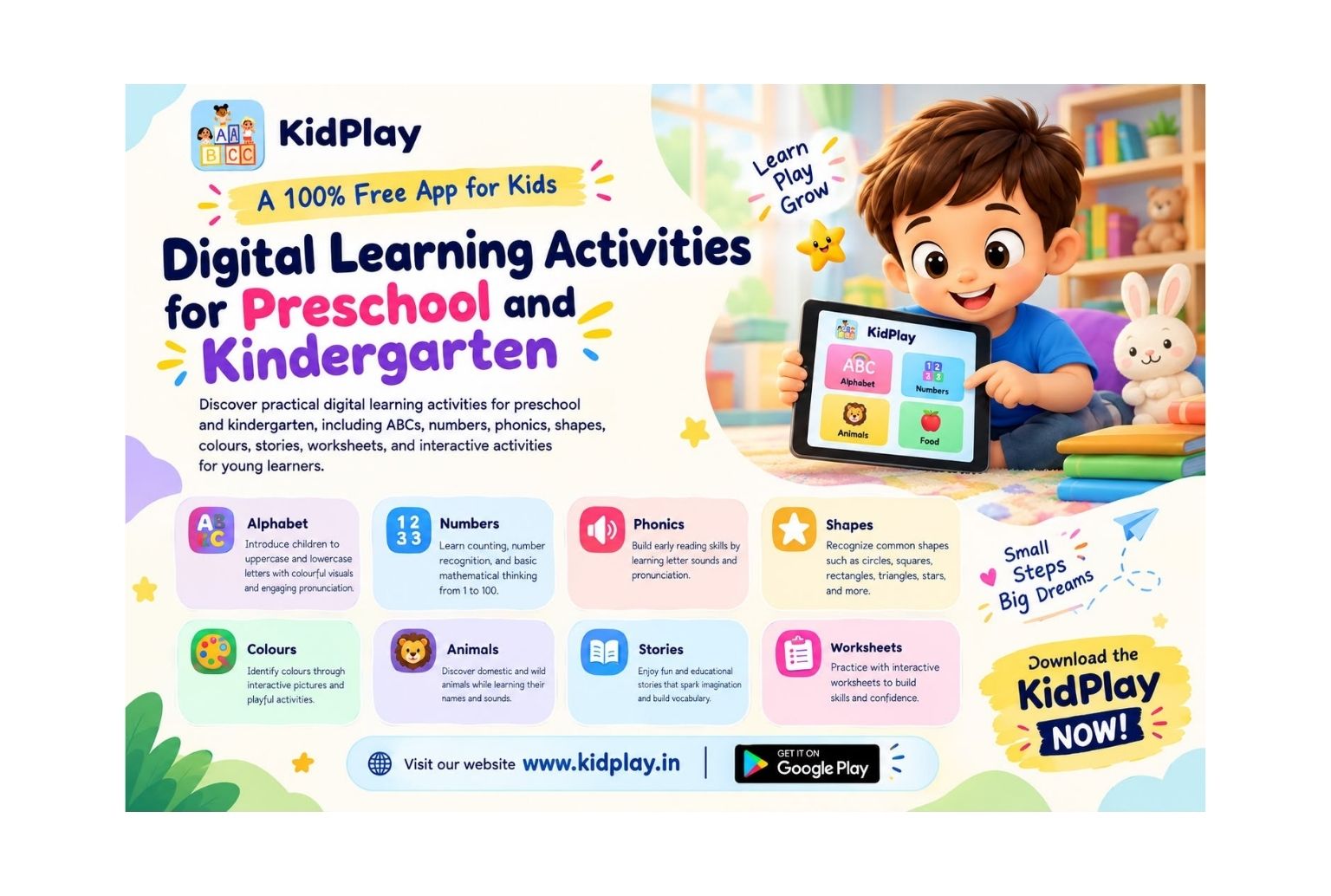
Looking for convenient early-learning resources? Explore KidPlay to find ABC, numbers, shapes, colours, phonics, worksheet, story, and interactive learning activities in one place.
5. Educational Stories for Preschoolers
Educational stories provide opportunities to develop listening, imagination, comprehension, and communication. Children can follow characters, recognise sequences, and encounter new vocabulary through age-appropriate storytelling.
After a story, parents can ask simple questions such as what happened first, which character they liked, or what might happen next. These conversations encourage children to recall information and express their ideas.
6. Worksheets and Interactive Activities
Worksheets can provide additional practice through matching, colouring, alphabet recognition, numbers, shapes, and simple observation tasks.
Parents can use worksheets after a digital activity to reinforce the concept without requiring another screen-based session. For example, children can draw shapes after exploring them or practise writing a letter they have just learned.
A Simple Daily Learning Activity Schedule
A predictable routine can make learning easier to manage at home. Parents can use this sample schedule and adjust it according to their child's age, attention span, and interests.
| Time | Activity | Focus |
| 10 minutes | ABC & Phonics | Letters and sounds |
| 10 minutes | Numbers | Counting and number recognition |
| 10 minutes | Shapes & Colours | Visual identification |
| 10–15 minutes | Educational Story | Listening and comprehension |
| 10 minutes | Worksheet | Practice and reinforcement |
| 20–30 minutes | Offline Play | Drawing, blocks, outdoor or creative play |
The schedule does not need to be followed rigidly. Parents can change the order or shorten activities when children need a break. The goal is to provide variety and balance throughout the day.
Parent-Friendly Screen-Time Tips
Digital learning is easier to manage when parents make screen use purposeful rather than continuous. A few simple habits can help create a comfortable learning routine:
- Keep sessions focused: Choose one learning activity at a time.
- Take regular breaks: Give children opportunities to move around and play away from the screen.
- Learn together: When practical, ask questions and talk about what your child is learning.
- Connect learning to real life: Follow digital activities with drawing, counting, finding colours, or other hands-on tasks.
- Protect offline time: Keep reading, creative play, physical activity, family conversations, and outdoor exploration in the routine.
- Follow your child's needs: If your child becomes tired or frustrated, pause and return to the activity later.
The aim is to make digital learning one useful part of the day—not the whole day.
Choosing the Right Learning Resources
Parents should look for resources that match their child's age and learning stage. Clear instructions, simple visuals, varied activities, and opportunities for repetition can make independent practice easier.
It is also useful to choose resources covering different areas of early learning rather than focusing on just one skill. A combination of literacy, numeracy, language, creative, and observation activities can give children a more varied learning experience.
Frequently Asked Questions
1. What are digital learning activities for preschool children?
They include alphabet, numbers, phonics, shapes, colours, stories, worksheets, matching, colouring, and other interactive activities designed for early learners.
2. Are digital learning activities useful for kindergarten children?
Age-appropriate activities can support early literacy, numeracy, vocabulary, listening, and observation when combined with hands-on learning.
3. What can parents include in a daily learning routine?
A routine can include ABCs, phonics, counting, shapes, colours, storytelling, worksheets, creative activities, and offline play.
4. How can parents balance digital and offline learning?
Use short, varied digital activities and follow them with reading, drawing, physical play, outdoor exploration, or hands-on activities connected to the same concept.
Conclusion
Finding suitable preschool and kindergarten learning activities does not have to be complicated. With a balanced routine, parents can combine digital resources with reading, play, creativity, and everyday learning opportunities.
Make your child's daily learning routine easier to organise. Download KidPlay from Google Play and explore a convenient collection of early-learning activities you can introduce at home. Whether you have a few minutes for ABC practice, a story session, or a simple worksheet, KidPlay can help you turn everyday parent-child time into meaningful learning time. Download it today and start building a fun, flexible learning routine for your child.