Children learn best when they can explore, experiment and enjoy new experiences. Educational games for kids make learning at home engaging by combining play with essential early learning skills. Activities involving letters, numbers, colours, shapes and stories can help children develop foundational knowledge while having fun.
Parents can make learning more effective by choosing age-appropriate games and following a flexible daily routine. A balanced combination of hands-on activities, creative play, storytelling and digital learning helps children remain interested without making every activity feel like a formal lesson.
What Are Educational Games for Kids?
Educational games are activities designed to develop children's knowledge and skills through play. They include alphabet recognition, counting exercises, colour matching, shape identification, drawing, storytelling and simple puzzles.
These activities encourage children to practise concepts through repetition, observation and participation. For example, children learning numbers can count household objects, while those practising the alphabet can identify letters in picture books. The goal is to make learning enjoyable and connected to everyday experiences.
Age-Specific Educational Game Recommendations
Games for Toddlers Aged 2–3 Years
Toddlers benefit from simple activities that develop observation, listening and vocabulary. Introduce picture matching, familiar animal sounds, colour recognition and identifying everyday objects. Ask your child to point to a ball or find a red toy. Keep activities playful and provide plenty of hands-on experiences.
Games for Preschoolers Aged 3–4 Years
Preschoolers can explore basic counting, alphabet recognition, colours and shapes. Try counting toys, matching letters, sorting objects by colour and completing simple puzzles. These activities introduce early literacy and numeracy without unnecessary pressure.
Games for Children Aged 4–5 Years
Children in this age group can gradually explore letter sounds, number recognition, patterns and simple problem-solving. Arrange coloured blocks in repeating patterns, match written numbers with quantities or ask questions about a story. Drawing activities also encourage creativity and communication.
Games for Kindergarten Children Aged 5–6 Years
Kindergarten children can practise early reading, sequencing, counting and basic mathematical concepts. Activities may include identifying beginning sounds, arranging numbers in order, solving simple puzzles and answering picture-based questions. Encourage children to explain their answers and learn at their own pace.
These age ranges are general guidelines. Adjust activities according to your child's interests, abilities and comfort level.
This schedule is flexible, not a strict requirement. Younger children may need shorter activities, frequent breaks and more unstructured play. Digital games can be used during selected learning sessions rather than throughout the day.
Best Educational Games to Try at Home
ABC and alphabet games: Ask children to identify letters in books and match them with familiar objects.
Numbers and counting games: Count toys, fruits or building blocks to connect numbers with everyday life.
Colours and shapes activities: Find circles around the home, identify different colours or sort toys by shape.
Drawing and storytelling: Encourage children to draw pictures, describe their creations and predict what happens next in a story.
These activities can be repeated with increasing difficulty as children gain confidence.
Discover KidPlay for Digital Learning
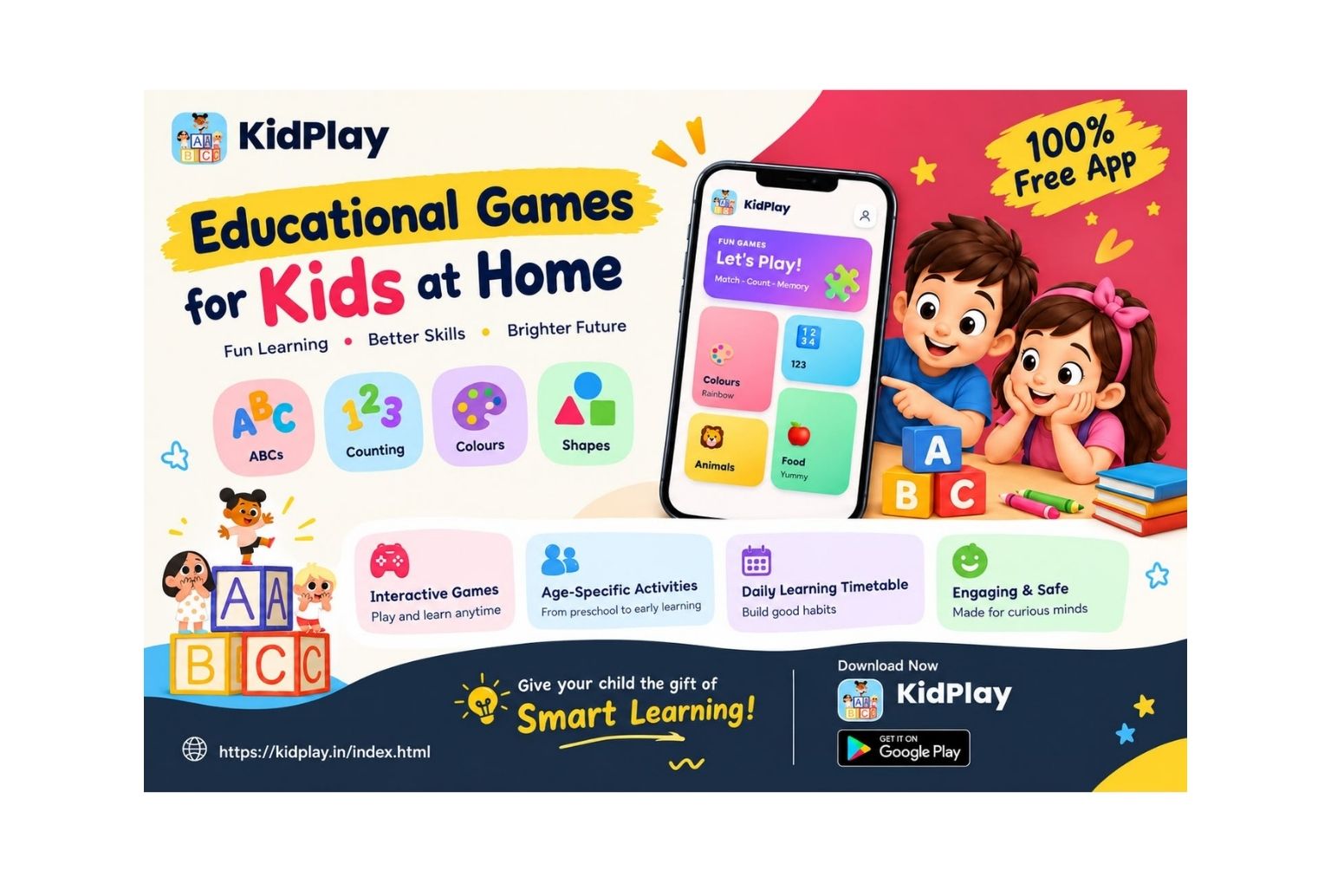
KidPlay is a 100 percent free app for kids offering learning experiences involving ABCs, numbers, colours, shapes, stories and creative activities. These resources can complement hands-on games and give children additional opportunities to practise foundational concepts.
Parents should explore the available content, select age-appropriate activities and remain involved in children's digital learning.
Explore learning activities for your child: Download KidPlay from Google Play or visit the official KidPlay website.
Frequently Asked Questions
1. What are the best educational games for kids at home?
Alphabet games, counting activities, colour matching, shape recognition, drawing and interactive stories are useful options for early learning.
2. How long should children spend on learning activities?
Keep sessions appropriate to the child's age and attention span. Alternate focused activities with breaks, physical movement and free play.
3. How can parents create a daily learning routine?
Choose a few short activities, schedule regular breaks and include reading, creative play and outdoor movement. Adapt the routine when your child needs more rest.
4. Are there free educational apps for kids?
Parents can explore KidPlay, a 100 percent free app for kids, for activities involving letters, numbers, colours, shapes and other early learning concepts.
5. Can educational games replace traditional learning?
No. Games work best alongside reading, practical activities, physical play, classroom learning and conversations with parents or teachers.
Conclusion
Educational games make learning at home more enjoyable when activities match children's ages and interests. A simple daily timetable combining alphabet practice, counting, creative activities, storytelling, breaks and free play can help families establish a balanced routine.
Choose activities flexibly, celebrate children's curiosity and let learning happen naturally through play. Explore KidPlay through Google Play or the official website for additional learning activities.