Helping kindergarten children recognise colours and everyday objects can be an enjoyable learning experience. Young children learn naturally by observing, sorting, touching and exploring their surroundings. Simple activities, such as matching a red apple with a red card or pairing a yellow toy with a yellow picture, introduce important early-learning concepts through play.
Matching colours and objects also encourages children to notice similarities, identify patterns and connect pictures with real-world experiences. Parents and teachers can introduce these skills through household objects, colourful worksheets, drawing activities and interactive educational games.
Why Are Colour and Object Matching Games Important?
Colour-matching activities help children recognise visual differences and organise information. When children group objects by colour, they begin developing classification, observation and logical-thinking skills. These abilities also support early mathematics and problem-solving.
Object matching introduces familiar items such as fruits, animals, vehicles, toys and household objects. Pairing a banana with yellow or a leaf with green helps children associate colours with things they see every day.
Regular practice can support:
- Colour recognition: Identifying red, blue, green, yellow and other colours.
- Visual discrimination: Recognising similarities and differences between objects.
- Memory development: Remembering colours, pictures and matching pairs.
- Vocabulary building: Learning object names and describing their features.
- Early mathematical thinking: Sorting, grouping, comparing and identifying patterns.
5 Fun Matching Colour and Object Activities for Kindergarten
Collect safe, everyday items such as building blocks, crayons, paper shapes and toys. Ask your child to place red objects together, followed by blue, green and yellow items. Name each colour aloud and encourage your child to find another object with the same colour.
Start with two or three colours and introduce more as your child becomes comfortable. This activity builds colour recognition without requiring special materials.
2. Match Fruits with Their Colours
Use pictures of familiar fruits, including red apples, yellow bananas, green grapes and oranges. Ask children to match each fruit with the appropriate colour card.
Extend the activity by discussing fruit names, shapes, tastes and textures. These conversations introduce new vocabulary and connect learning with everyday experiences.
Prepare circles, squares, triangles and rectangles in different colours. Ask your child to match identical shapes or find objects that share the same colour.
For example, children can pair two blue circles or identify all the yellow triangles. This activity combines colour recognition with early geometry and visual observation.
4. Find Matching Objects at Home
Turn your home into a playful learning space. Ask your child to find something red, something green or two objects that share a colour. Books, cushions, clothing and suitable toys can become useful learning materials.
Keep the activity relaxed and age-appropriate. Offer hints when necessary, praise effort and allow children to explore at their own pace.
5. Practise with Interactive Learning Games
Digital learning activities can complement hands-on play. Interactive games give children opportunities to identify colours, recognise pictures, select matching items and practise visual associations.
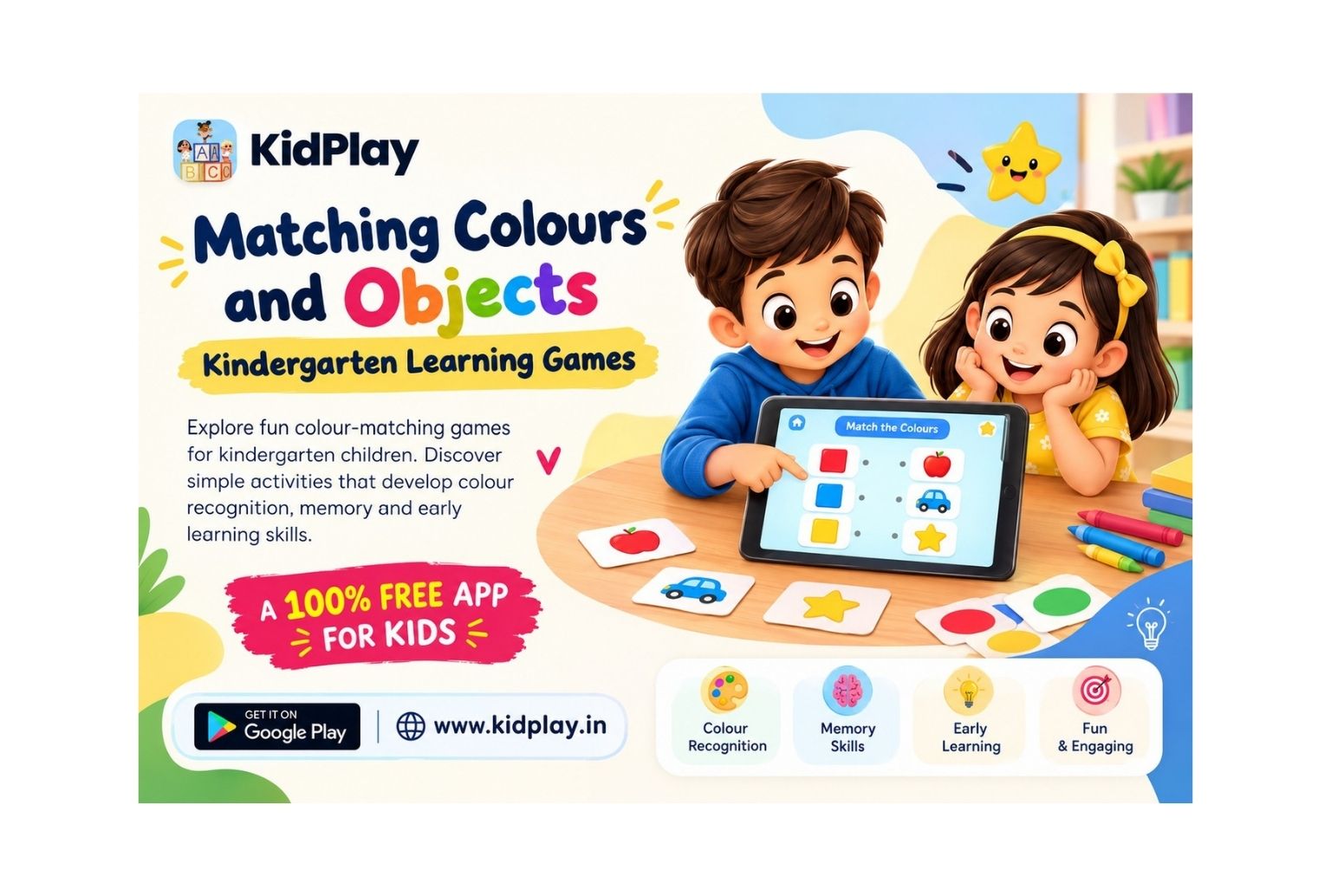
Parents looking for additional early-learning activities can explore the KidPlay app on Google Play. It is presented as a 100 percent free app for kids, offering another option to include in a balanced learning routine. More information is available on the official KidPlay website.
Frequently Asked Questions (FAQs)
1. At what age can children start matching colours?
Children can begin exploring colours during toddlerhood. Introduce simple matching activities gradually and adjust their difficulty to the child's developmental stage.
2. How do colour-matching games help kindergarten children?
These games support colour recognition, visual discrimination, memory, vocabulary, classification and early problem-solving through enjoyable practice.
3. What objects can parents use for colour-matching activities?
Crayons, blocks, picture cards, fruits, toys, clothing and safe household objects are useful choices. Familiar items make activities easier to understand.
4. Can educational apps help children learn colours?
Yes. Age-appropriate educational apps can provide interactive opportunities to practise recognising colours and matching objects. They work best alongside hands-on activities and adult guidance.
5. Are there free learning apps for kindergarten children?
Parents can explore free learning options such as KidPlay and review the available activities before introducing them into a child's routine.
Conclusion
Matching colours and objects is a simple way to make kindergarten learning engaging. From sorting colourful toys to identifying fruits and exploring interactive games, children can practise essential early-learning skills through everyday experiences.
Combine these activities with storytelling, drawing and supervised digital learning to encourage curiosity and confidence.
Ready to make learning more enjoyable? Visit the KidPlay website or get the app on Google Play to explore its available activities. This 100 percent free app offers parents an additional option for supporting playful early learning.