As a parent, you may wonder how to help your preschooler recognise letters, understand sounds and develop early reading skills without making learning stressful. Young children learn best when activities feel like play rather than formal lessons. Simple phonics games for preschoolers can turn everyday moments into enjoyable learning opportunities.
Whether your child is beginning to recognise ABCs or showing interest in words, letter sound games, picture matching and alphabet activities can help build essential language skills. These activities encourage children to listen carefully, identify beginning sounds, improve vocabulary and develop confidence at their own pace.
Teaching phonics at home does not require expensive materials or complicated lessons. With colourful pictures, familiar objects and engaging preschool learning games, parents can introduce letter sounds naturally.
What Are Phonics Games for Preschoolers?
Phonics games help children understand the relationship between letters and sounds. For example, children learn that B represents the beginning sound in ball, bat and bag.
Rather than memorising letters, preschoolers explore sounds through pictures, storytelling, repetition and familiar objects.
These activities support alphabet recognition, pronunciation, listening skills and early reading readiness.
Best Phonics Games for Preschoolers
1. Alphabet Sound Recognition Games
Alphabet recognition activities introduce children to letters and their corresponding sounds.
Parents can use colourful alphabet cards featuring familiar objects:
- A – Apple
- B – Ball
- C – Cat
- D – Dog
Encourage children to repeat beginning sounds while observing pictures. This strengthens connections between spoken language and written letters.
2. Picture and Letter Matching Games
Picture matching activities help children connect letters with familiar objects.
Show pictures of fruits, animals or household items and ask children to identify their beginning sounds.
For example, display a mango and ask which letter represents its first sound.
These preschool alphabet games develop observation, vocabulary and sound recognition skills.
Beginning sound games encourage children to recognise individual sounds in spoken words.
Choose familiar objects such as a pencil, cup, book or toy. Say each word clearly and ask children to identify its first sound.
For example, ask, "What sound comes first in sun?"
This activity strengthens listening skills and prepares children for reading.
Turn phonics practice into an enjoyable home activity.
Choose a letter and encourage children to find objects beginning with its sound.
For example, while practising M, children might identify a mat, mug or mango.
This activity connects alphabet learning with everyday experiences.
Interactive Preschool Learning Activities
Digital educational resources can complement traditional phonics practice through colourful visuals, alphabet recognition and interactive activities.
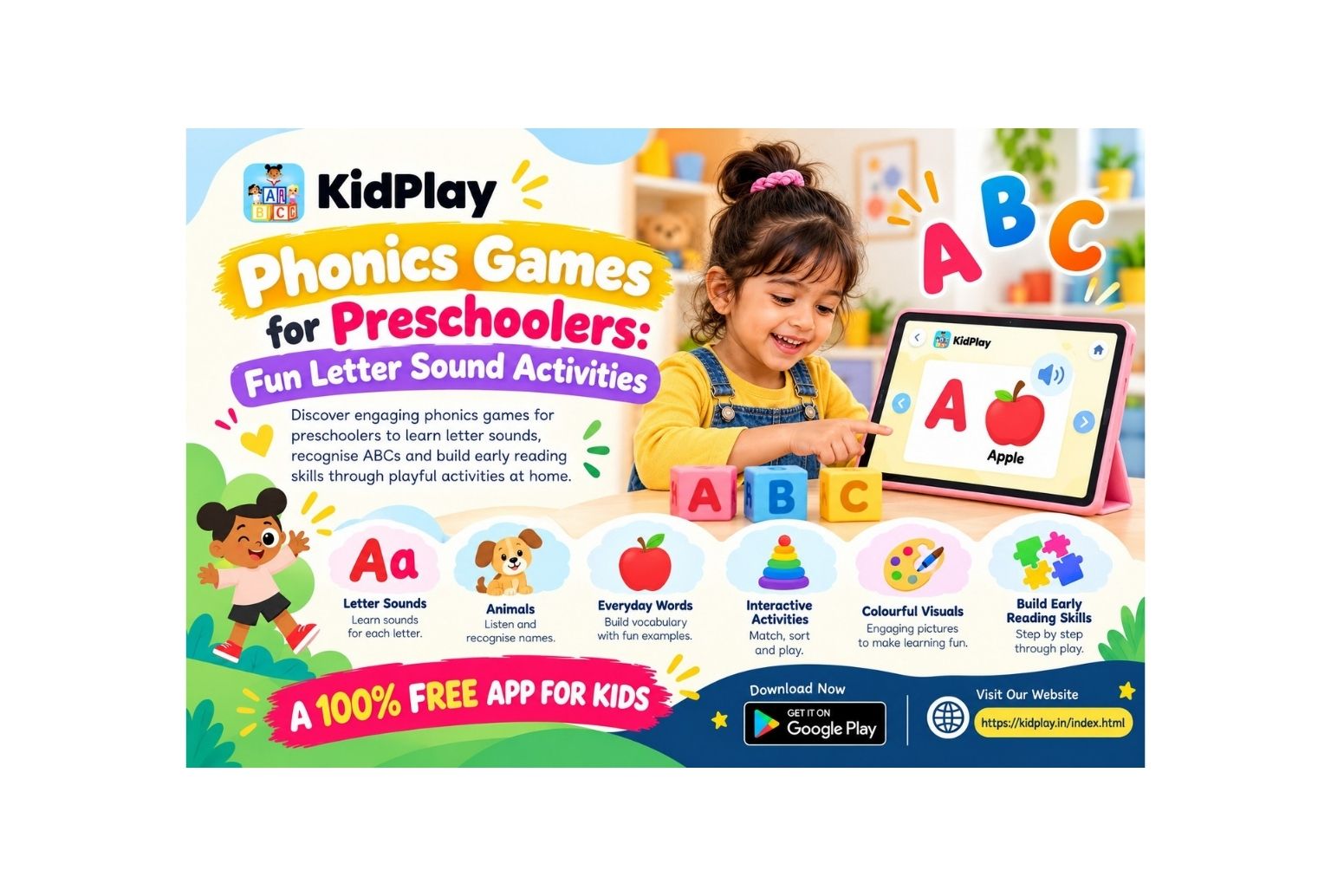
KidPlay provides preschool learning activities covering ABCs, numbers, colours, shapes, animals and picture-based learning.
Parents exploring a 100 percent free app for kids can use these activities to support foundational learning alongside parent-guided sound practice.
Combining educational games with storytelling, conversation and hands-on activities creates a balanced learning experience.
Explore Preschool Learning Activities
Benefits of Phonics Games for Early Learning
Play-based phonics activities support essential language development.
Important benefits include:
- Improved alphabet recognition
- Stronger listening and pronunciation
- Better vocabulary development
- Increased sound awareness
- Early reading readiness
- Greater learning confidence
Parents should encourage participation without expecting immediate results. Positive reinforcement and consistent practice help children enjoy learning.
Frequently Asked Questions (FAQs)
1. What are the best phonics games for preschoolers?
Alphabet matching, picture recognition, beginning sound identification and letter treasure hunts are useful phonics activities.
2. At what age should children start learning phonics?
Many children begin exploring letter sounds between ages three and five, depending on their developmental readiness.
3. How can parents teach phonics at home?
Parents can use alphabet cards, storytelling, picture matching and short daily sound recognition activities.
4. Can educational apps support phonics learning?
Educational apps can reinforce alphabet recognition and vocabulary when combined with parent-guided sound practice.
Conclusion
Phonics games for preschoolers create an enjoyable foundation for early literacy. Through alphabet recognition, sound identification, picture matching and storytelling, children gradually develop essential reading skills.
Parents can encourage progress through short, engaging activities that connect letters with everyday experiences.
For additional ABCs, numbers, colours, shapes and interactive preschool activities, explore the available digital learning resources.
Discover More Early Learning Activities
📱 Download KidPlay from Google Play