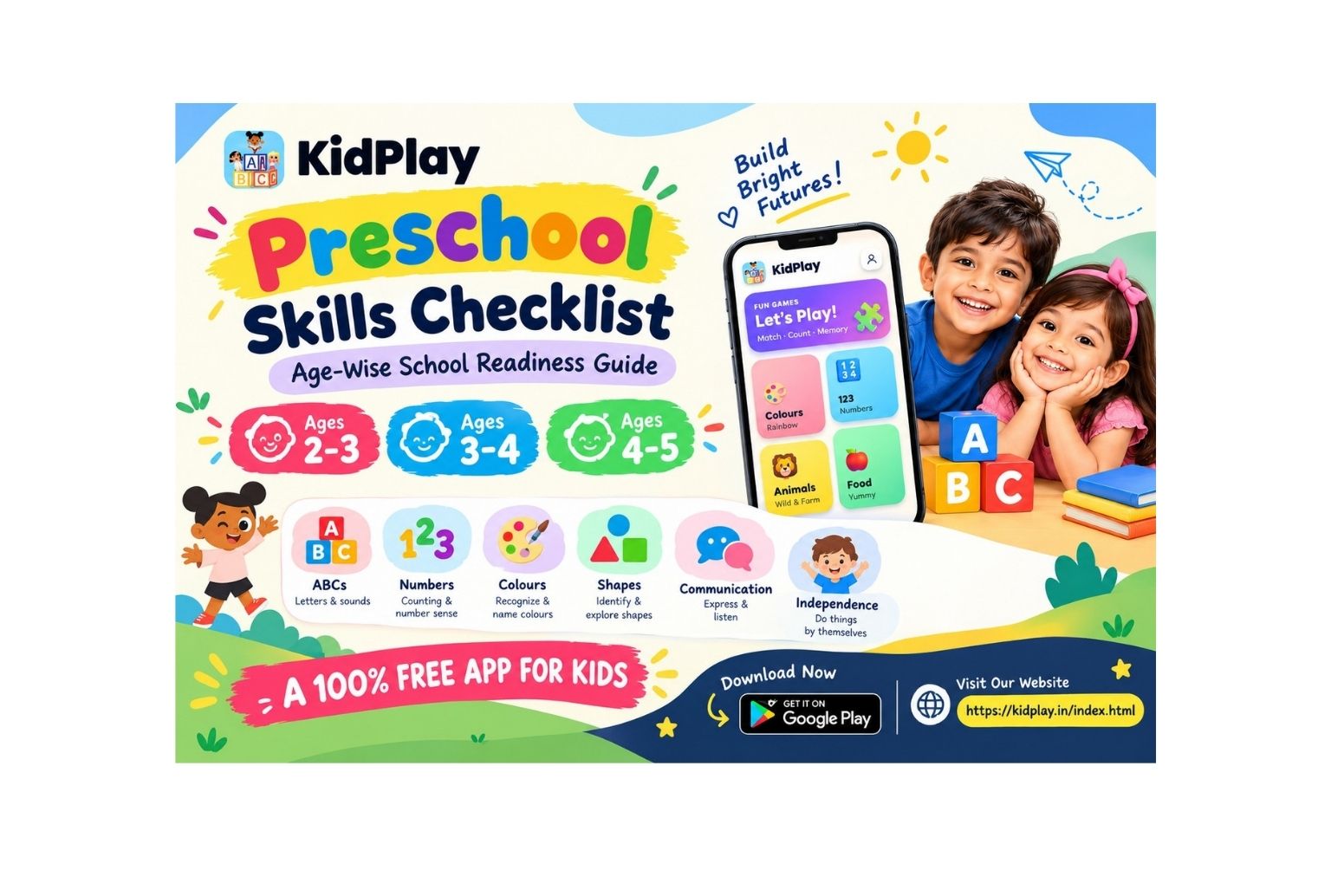
Starting preschool is an exciting milestone for children and parents. Before school begins, children can practise everyday skills that help them communicate, explore, follow routines and become more independent. Preschool readiness does not mean knowing everything in advance. It means developing confidence through play, conversation and simple activities at home.
Children develop at different rates, so age-based expectations should be flexible guidelines rather than strict targets. Parents can introduce letters, numbers, colours, shapes, animals, stories and simple problem-solving games through enjoyable daily experiences.
Preschool Skills Checklist: What Should Children Practise?
1. Age 2–3 Years: Building Basic Skills
At this stage, children are beginning to explore language, movement and the world around them.
Skills to practise:
- Follow simple, familiar instructions.
- Name familiar objects, animals and people.
- Recognise a few familiar colours.
- Explore simple shapes, such as circles.
- Begin counting objects with adult support.
- Scribble with crayons and stack blocks.
- Practise washing hands with help and putting toys away.
Activities: Read picture books, sing alphabet songs, identify animals and count toys together. Focus on exploration rather than memorisation.
2. Age 3–4 Years: Developing Early Learning Skills
Children may begin using longer sentences, asking questions and showing greater interest in letters, numbers and imaginative play.
Skills to practise:
- Speak in simple sentences and communicate basic needs.
- Recognise some letters, particularly those in their name.
- Count small groups of objects with support.
- Identify common colours and basic shapes.
- Sort objects by colour, shape or size.
- Draw simple lines and circles.
- Take turns and follow familiar routines with reminders.
Activities: Match shapes, sort colourful blocks, count fruits, explore animal names and practise identifying letters through picture cards.
3. Age 4–5 Years: Preparing for Kindergarten
Children approaching kindergarten can gradually practise skills that support classroom participation and early academic learning.
Skills to practise:
- Follow two-step instructions when appropriate.
- Describe familiar experiences and answer simple questions.
- Recognise some letters and connect familiar letters with their sounds.
- Count objects and recognise some numerals.
- Identify common colours, shapes and patterns.
- Hold crayons comfortably and practise drawing simple pictures.
- Manage simple self-care tasks and participate in group activities.
Essential Preschool Skills for Every Age
Introduce uppercase and lowercase letters through songs, picture books and matching activities. Older preschoolers can begin connecting familiar letters with their sounds. Keep learning playful instead of expecting perfect recall.
Use toys, fruits and household objects to practise counting and sorting. Introduce colours such as red, blue, yellow and green, along with circles, squares, triangles and rectangles. These activities build early mathematical understanding and visual recognition.
Communication and Independence
Encourage children to express their needs, listen to others, share materials and ask for help. Practise handwashing, tidying toys, using utensils and following simple routines. These skills help children participate more confidently in preschool life.
How Can Parents Make Preschool Learning Fun at Home?
A simple daily routine can support preschool preparation without overwhelming children.
- Morning: Identify colours, shapes and familiar objects.
- Learning time: Spend 10–15 minutes exploring letters, numbers or picture cards, following your child's interest.
- Afternoon: Read a picture book, discuss animals or count toys.
- Evening: Enjoy drawing, matching games, storytelling or sorting activities.
How Digital Learning Can Support Preschool Readiness
Digital activities can complement hands-on learning by providing additional opportunities to explore ABCs, numbers, colours, shapes and animals. They should not replace reading with parents, physical play or real-world experiences.
Parents can explore KidPlay's official website, a 100 percent free app for kids featuring activities related to early learning concepts. Choose suitable activities for your child's developmental stage and supervise screen use.
Explore playful learning opportunities for your child: Visit the KidPlay website or download the app from Google Play.
Frequently Asked Questions About Preschool Readiness
1. What should a 3-year-old know before preschool?
A 3-year-old can practise communicating basic needs, following simple instructions, identifying familiar objects, exploring colours and shapes, and participating in simple play activities. Children do not need to master the alphabet or counting before preschool.
2. What should a 4-year-old learn before kindergarten?
Children can practise recognising some letters, counting small groups, identifying common colours and shapes, following routines, drawing and taking turns. Expectations depend on individual development and the school's programme.
3. What skills should a 5-year-old practise before school?
Useful skills include listening to instructions, communicating clearly, recognising some letters and numbers, counting objects, drawing simple pictures and managing age-appropriate self-care tasks.
4. Should preschoolers learn reading and writing at home?
Parents can introduce letters, sounds, books, drawing and early writing movements through play. Formal reading and writing expectations vary by age, development and school curriculum.
5. Can educational apps support preschool learning?
Yes. Age-appropriate apps can complement activities involving letters, numbers, colours, shapes and animals. Parents should balance screen use with conversation, movement and hands-on exploration.
Conclusion
Use this age-wise preschool skills checklist as a flexible guide, celebrate progress and keep learning enjoyable. Download the 100 percent free KidPlay app from Google Play to explore early learning activities alongside play, reading and family interaction.