Preparing children for nursery or kindergarten is an exciting milestone for parents. School readiness involves more than recognising letters and numbers. Children also develop communication, listening, observation, problem-solving, coordination and independence skills. Enjoyable activities can introduce these abilities naturally while encouraging curiosity and confidence.
School readiness games for nursery and kindergarten children support early learning through play. Activities involving ABCs, numbers, colours, shapes, animals, matching and drawing help children explore their surroundings. Parents can combine everyday games, storytelling and age-appropriate digital resources to create a balanced learning experience at home.
What Are School Readiness Games?
School readiness games introduce children to foundational skills needed for preschool, nursery and kindergarten. These activities support early literacy, numeracy, thinking, communication and fine motor development.
Examples include identifying alphabet letters, counting toys, sorting objects by colour, matching shapes, recognising animals and following simple instructions. Such activities also help children practise taking turns, paying attention and expressing their ideas.
Every child develops at an individual pace. The goal is not to master every academic skill before school starts, but to encourage curiosity, confidence and a positive attitude towards learning.
7 Fun School Readiness Games for Nursery and Kindergarten
1. Alphabet Recognition Games
Introduce children to the English alphabet through letter cards, picture books and familiar objects. Ask them to identify letters in their names or connect letters with matching pictures. For example, A can represent an apple.
Alphabet recognition games help children become familiar with letter shapes and sounds. Keep sessions short and playful rather than turning them into lengthy lessons.
2. Number Counting Activities
Ask children to count blocks, toys, pencils or pieces of fruit. Begin with small quantities and gradually introduce larger numbers as their confidence develops.
Counting games support early mathematical understanding. Number learning activities can also help children recognise numerals and practise counting from 1 to 10 before progressing towards higher numbers, including 1 to 100.
3. Colours and Shapes Matching
Place colourful objects on a table and ask children to group similar colours. Encourage them to identify circles, squares, triangles and rectangles around the house.
These activities develop observation, classification and visual recognition. Drawing familiar shapes provides another enjoyable opportunity to practise these concepts.
4. Animal Recognition Games
Show children pictures of familiar animals and ask them to name each animal or imitate its sound.
Animal recognition games introduce vocabulary, listening and speaking opportunities while connecting pictures with real-world knowledge.
5. Matching and Sorting Games
Give children safe household objects and ask them to sort items by colour, size, shape or category. Picture-matching games are another simple option.
These activities encourage logical thinking, comparison and problem-solving. They also help children practise following instructions and completing tasks independently.
6. Drawing and Pre-Writing Activities
Encourage children to draw lines, circles, simple patterns and favourite pictures. Provide age-appropriate crayons and paper, allowing them to experiment without expecting perfect results.
Drawing and tracing help children practise hand control and coordination needed for future writing. Celebrate their efforts and let creativity guide the activity.
7. Listening and Storytelling Games
Read a short story and ask children to identify characters, describe pictures or predict what happens next. You can also give simple instructions, such as finding a red object or bringing a particular toy.
These games develop vocabulary, imagination, listening comprehension and communication skills that support classroom participation.
Digital Learning Activities for Young Children
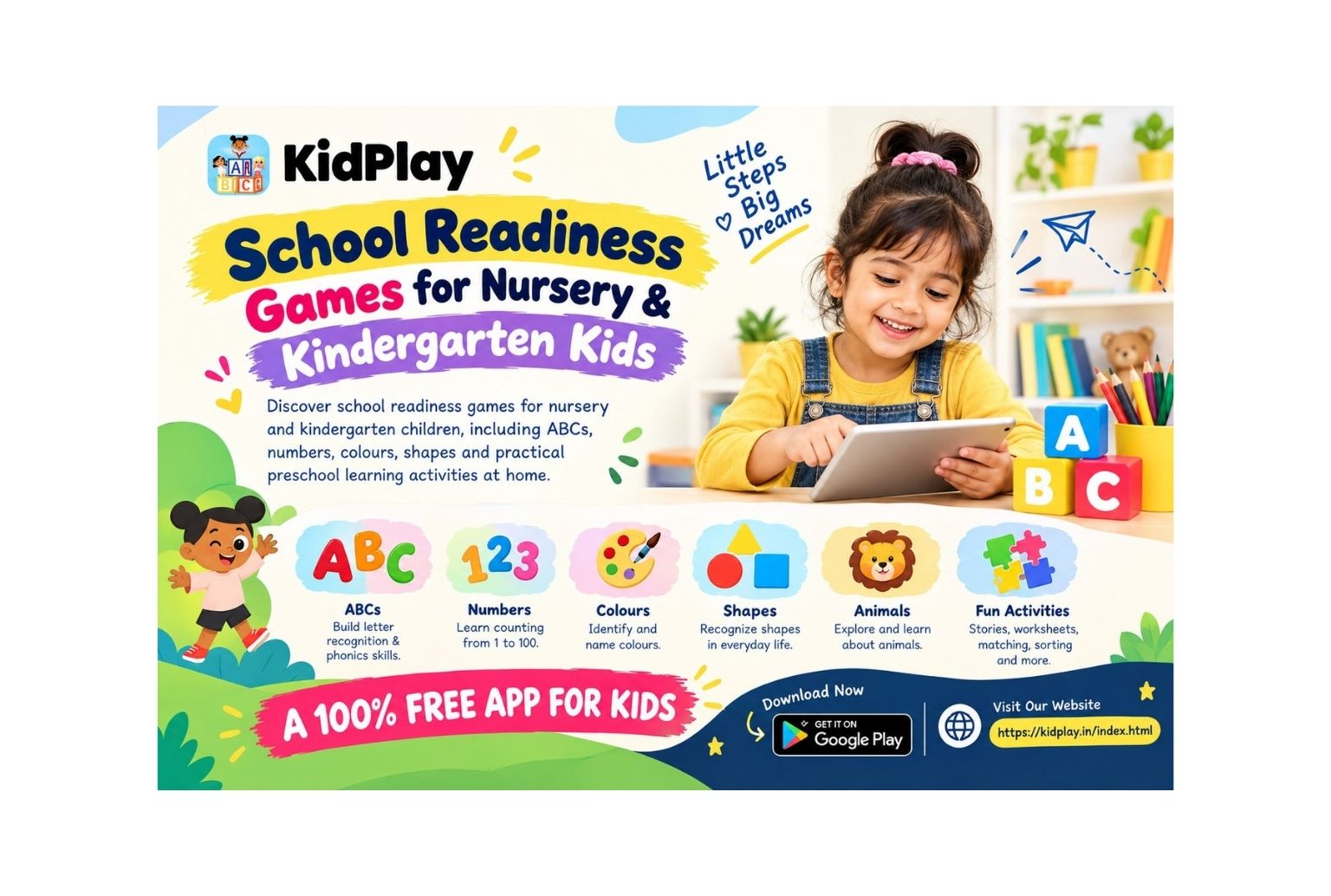
Digital learning resources can complement hands-on school readiness games. KidPlay is a 100 percent free app for kids offering activities related to ABCs, numbers, colours, shapes, animals, worksheets, stories, drawing, sorting and matching.
Parents can use these resources for additional practice while continuing to encourage physical play, reading and family interaction. Explore the KidPlay website or Google Play listing for more information.
Frequently Asked Questions
1. Which games are best for nursery school readiness?
Alphabet recognition, counting, colour matching, shape sorting, animal identification, drawing and storytelling are useful activities for nursery-aged children.
2. How can I prepare my child for kindergarten at home?
Introduce simple routines involving stories, counting, creative play, following instructions and practising independence, such as putting toys away.
3. When should children start school readiness activities?
Children can explore age-appropriate learning games during the preschool years. Choose activities according to their interests, abilities and developmental stage.
4. Can educational apps help with school readiness?
Educational apps can provide additional practice with letters, numbers, shapes and colours. Balance screen-based learning with physical activities, reading and social interaction.
5. Is KidPlay a 100 percent free app for kids?
KidPlay is presented as a 100 percent free app for kids, with early learning activities accessible through its website and Google Play listing.
Conclusion
School readiness games help nursery and kindergarten children explore literacy, numbers, colours, shapes, communication and problem-solving through enjoyable experiences. Consistent practice, creative play and positive encouragement can help children become more familiar with early learning concepts.
For additional preschool learning activities, visit the KidPlay website or download the app from Google Play. Complementing everyday play with age-appropriate learning resources can make preparation for school engaging and enjoyable.