Learning shapes is an important part of early childhood education. Preschoolers begin understanding the world by observing objects, recognising patterns and discovering similarities. Identifying circles, squares, triangles and rectangles helps children develop visual recognition, vocabulary, observation and early mathematical skills.
Parents can make learning enjoyable through household activities, colourful stories, matching games and interactive educational resources. Instead of simply memorising shapes, children learn more naturally when they can see, touch, draw and identify them in everyday surroundings. Short, playful learning sessions can build confidence and encourage curiosity.
Why Is Shape Recognition Important for Preschoolers?
Shape recognition helps children understand basic geometry and recognise patterns in their surroundings. When children identify a round plate, a rectangular book or a triangular roof, they connect abstract concepts with familiar objects.
Learning shapes also encourages language development. Preschoolers practise describing objects using words such as round, straight, curved and pointed. These experiences support observation, classification, problem-solving and early mathematical understanding.
Five Fun Shape Recognition Activities for Kids
Ask children to find objects that resemble basic shapes. Look for round plates, square cushions, rectangular books and triangular decorations. Encourage them to name each shape and explain what they notice. This simple activity develops observation skills using familiar household objects.
Cut out paper circles, squares, triangles and rectangles. Ask your child to group matching shapes together. Once they understand the basics, introduce different sizes and colours. Sorting activities help children recognise similarities and differences while practising classification.
Give preschoolers paper and crayons to draw and colour basic shapes. Encourage them to turn circles into suns, squares into windows and triangles into mountains. Drawing combines shape recognition with creativity and fine motor practice.
Use age-appropriate building blocks to create squares, rectangles and triangles. Ask children to count the sides and identify the corners. Help them combine shapes to create houses, trees or simple pictures. Choose safe materials suitable for your child's age.
5. Match Shapes with Everyday Objects
Prepare picture cards featuring familiar objects and ask children to match them with similar shapes. A ball can represent a circle, a book a rectangle and a triangular road sign a triangle. This activity strengthens visual recognition and real-world understanding.
Shape Recognition Games Using Digital Learning
Interactive educational games can reinforce concepts through colourful visuals, repetition and simple instructions. Shape matching, sorting, tracing and object identification activities provide additional opportunities for children to practise at their own pace.
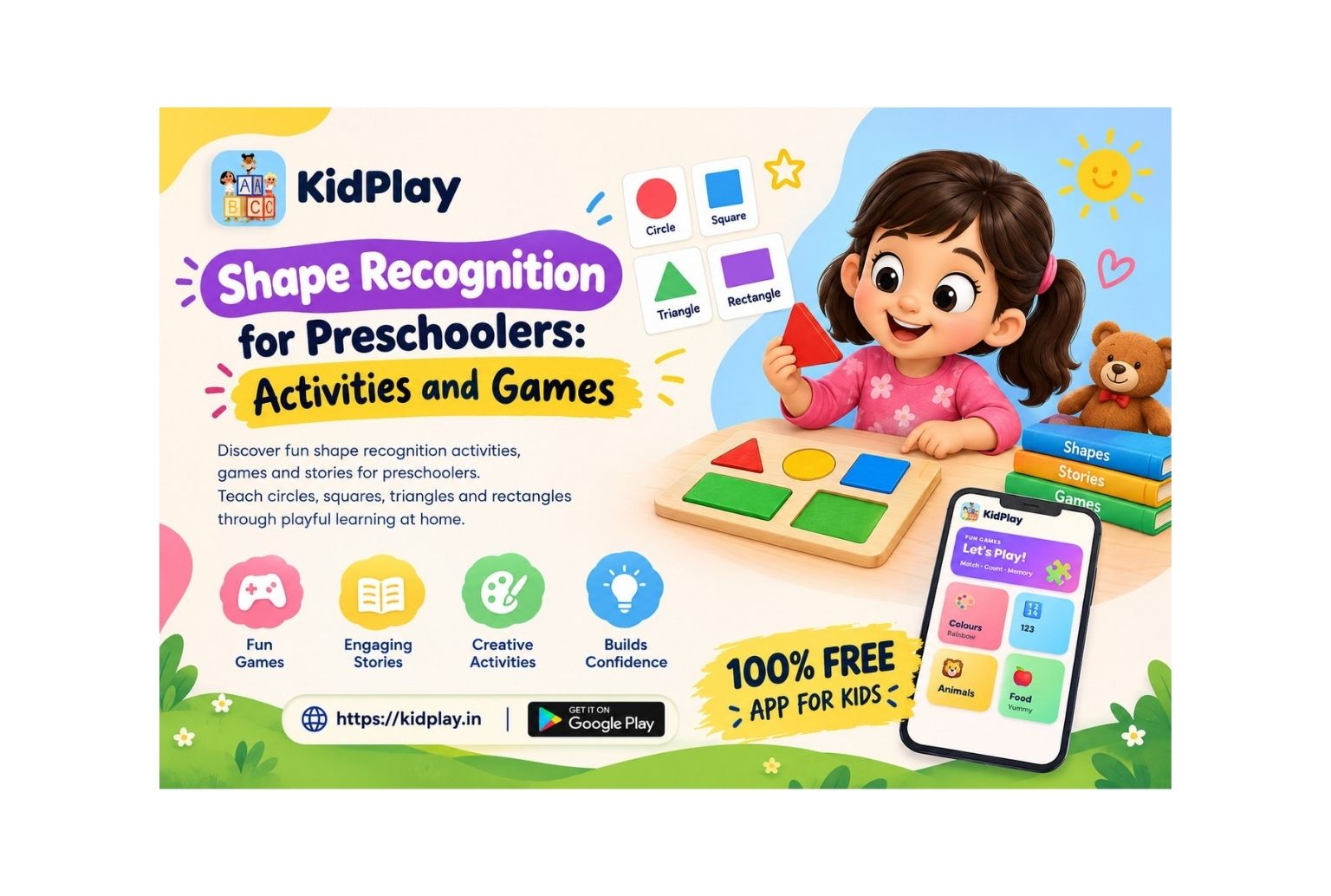
Parents can combine these activities with digital learning resources such as KidPlay, a 100 percent free app for kids. Choose age-appropriate activities and balance screen use with reading, creative play and real-world exploration.
Teach Shapes Through Simple Stories
Stories make shape recognition memorable by connecting concepts with characters and everyday experiences. Parents can create short stories featuring circles, squares, triangles and rectangles.
For example, in “The Little Circle's Adventure,” a curious circle explores a town and discovers a round clock, a ball and a wheel. Along the way, it meets a square window and a triangular roof.
Pause during the story and ask questions such as, “Which shape has three sides?” or “Can you find something round in your room?” Children can also draw the characters after the story. These activities combine listening, imagination, vocabulary and shape identification.
A Simple Daily Shape Learning Routine
A short, consistent routine can make preschool learning easier to manage.
- 5 minutes: Find and identify shapes around the home.
- 5 minutes: Complete a drawing, sorting or matching activity.
- 5 minutes: Read a shape-themed story or explore an appropriate educational game.
- 2 minutes: Review the shapes learned that day.
Frequently Asked Questions
1. At what age should children start learning shapes?
Children can begin exploring simple shapes during toddlerhood. Preschoolers gradually learn to identify circles, squares, triangles and rectangles through repetition and play.
2. What are the best shape recognition activities for preschoolers?
Shape hunts, sorting games, drawing, matching objects, building with blocks and storytelling are enjoyable ways to develop early shape recognition.
3. How can parents teach shapes at home?
Use familiar objects, picture books, colouring activities and short conversations. Ask children to identify shapes around them and practise regularly through playful activities.
4. Can educational apps help children recognise shapes?
Age-appropriate educational apps can provide visual examples and interactive practice. They are most useful when combined with parent-guided activities, reading and physical play.
5. Where can parents find additional digital learning resources?
Parents can explore the KidPlay website or its Google Play listing to review the available resources and current app details.
Conclusion
Shape recognition for preschoolers becomes enjoyable when children learn through everyday objects, games, creative activities and stories. From finding circles around the house to building pictures with squares and triangles, simple experiences can support early mathematical understanding and vocabulary.
Make learning part of your child's daily routine with hands-on play, storytelling and age-appropriate digital resources.
Explore the learning app: Visit the KidPlay website | Get it on Google Play